
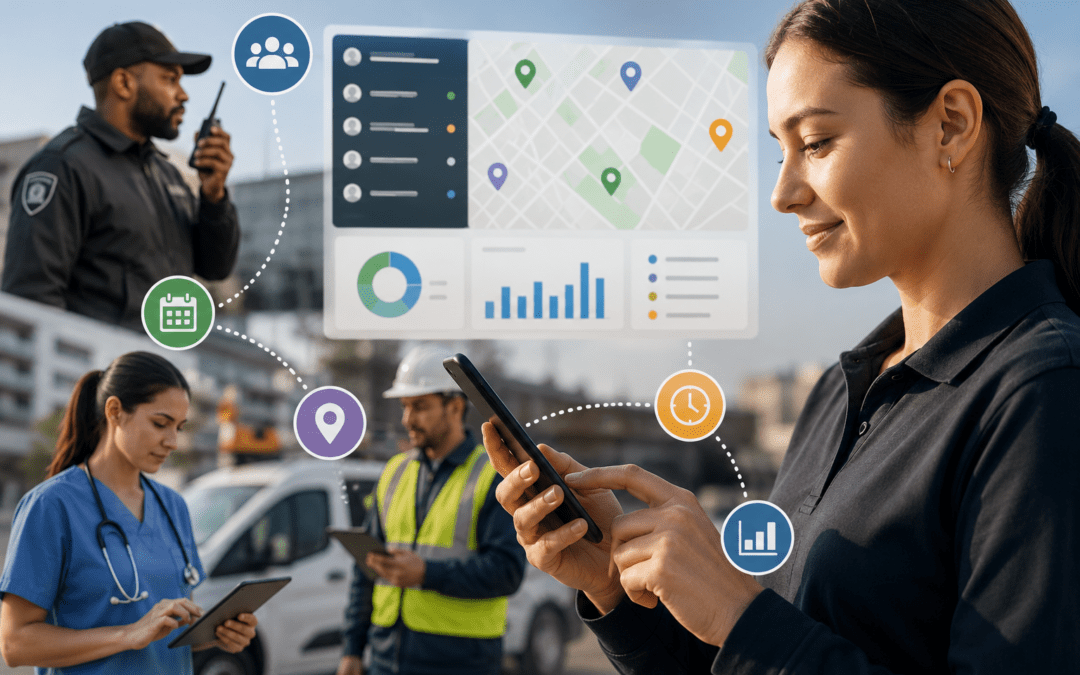
Organizations today rely more than ever on employees who work beyond the traditional office. Security guards patrol multiple sites, healthcare professionals provide care in the field, event staff move between venues, and service technicians travel from customer to customer throughout the day.
Managing a mobile workforce presents unique challenges. Schedules change quickly, communication must happen in real time, and managers need visibility into employee attendance, productivity, and location. Without the right systems, businesses often struggle with staffing gaps, overtime costs, compliance risks, and inefficient operations.
Mobile workforce management helps organizations overcome these challenges by providing the tools and processes needed to manage employees wherever they work.
What Is Mobile Workforce Management?
Mobile workforce management is the process of scheduling, tracking, communicating with, and supporting employees who work outside a traditional office environment.
A mobile workforce may include:
- Security officers
- Healthcare workers
- Field service technicians
- Maintenance teams
- Event staff
- Transportation employees
- Utility workers
- Construction crews
- Hospitality employees
Unlike office-based teams, mobile employees often work across multiple locations, shifts, and job sites. Managers must coordinate staffing, monitor attendance, communicate updates, and ensure compliance without direct oversight.
Mobile workforce management combines people, processes, and technology to ensure the right employees are in the right place at the right time.
Why Mobile Workforce Management Matters
The workforce has become increasingly distributed. Organizations must manage employees across multiple sites, often with changing schedules and customer demands.
Traditional methods such as spreadsheets, phone calls, paper timesheets, and manual scheduling create significant operational challenges.
Effective mobile workforce management enables organizations to:
- Improve scheduling accuracy
- Reduce labor costs
- Increase productivity
- Enhance employee engagement
- Improve customer service
- Maintain compliance requirements
- Gain real-time workforce visibility
As businesses grow and operations become more complex, managing a mobile workforce manually becomes increasingly difficult and costly.
Common Mobile Workforce Management Challenges
Organizations with mobile employees face several unique workforce management challenges.
Scheduling Complexity
Managers often coordinate hundreds of employees across multiple shifts, locations, and customer sites.
Manual scheduling can lead to:
- Double-booked employees
- Understaffed shifts
- Excess overtime
- Last-minute schedule changes
- Increased administrative workload
Even minor scheduling errors can impact service delivery and customer satisfaction.
Lack of Real-Time Visibility
When employees work remotely, managers often have limited visibility into workforce activity.
Questions frequently arise:
- Did employees arrive on time?
- Is a shift currently staffed?
- Are employees working at the correct location?
- Are assignments being completed as planned?
Without real-time workforce data, managers often rely on delayed or incomplete information.
Communication Gaps
Mobile workers may not regularly check email or have access to company systems during their shifts.
As a result, organizations struggle to communicate:
- Schedule updates
- Shift openings
- Emergency notifications
- Policy changes
- Client requests
Communication delays can result in missed shifts and operational disruptions.
Time and Attendance Issues
Tracking employee attendance across multiple locations can be difficult.
Common challenges include:
- Buddy punching
- Time theft
- Inaccurate timesheets
- Late arrivals
- Early departures
Manual attendance processes often create payroll inaccuracies and increase labor costs.
Compliance Risks
Organizations must comply with labor laws, union agreements, certifications, and industry-specific regulations.
Managers must ensure:
- Required breaks are provided
- Overtime rules are followed
- Certifications remain current
- Staffing requirements are met
Failure to comply can result in penalties, audits, and legal issues.
Employee Retention Challenges
Mobile employees often value flexibility, communication, and schedule transparency.
Organizations that struggle with scheduling fairness, shift availability, or communication may experience:
- Higher turnover
- Increased absenteeism
- Lower employee engagement
- Greater recruiting costs
Benefits of Mobile Workforce Management
Implementing a structured mobile workforce management strategy delivers significant operational benefits.
Increased Productivity
Automation reduces administrative work associated with scheduling, attendance tracking, and communication.
Managers spend less time handling routine tasks and more time focusing on operational improvements.
Employees also benefit from easier access to schedules, shift updates, and work information through mobile applications.
Better Workforce Visibility
Modern workforce management systems provide real-time insight into workforce activity.
Managers can quickly see:
- Active employees
- Shift coverage status
- Attendance records
- Schedule changes
- Labor utilization
Improved visibility enables faster decision-making and more effective workforce planning.
Reduced Labor Costs
Labor is often one of the largest operating expenses for organizations with mobile employees.
Workforce management software helps reduce costs by:
- Minimizing overtime
- Preventing overstaffing
- Improving schedule efficiency
- Reducing payroll errors
- Increasing workforce utilization
Even small improvements can generate significant annual savings.
Improved Employee Experience
Employees increasingly expect mobile access to workplace information.
Self-service tools allow employees to:
- View schedules
- Request time off
- Swap shifts
- Accept open shifts
- Receive notifications
Greater flexibility and autonomy often leads to improved engagement and retention.
Enhanced Customer Service
When organizations consistently place qualified employees where they are needed most, service quality improves.
Customers benefit from:
- Reliable staffing
- Faster response times
- Better communication
- Consistent service delivery
Strong workforce management directly supports stronger customer relationships.
Essential Features of Mobile Workforce Management Software
The most effective workforce management platforms provide a comprehensive set of tools designed specifically for mobile employees.
Employee Scheduling
Scheduling software helps organizations create optimized schedules based on:
- Availability
- Skills
- Certifications
- Labor requirements
- Customer demand
Automated scheduling reduces manual effort while improving accuracy.
Mobile Employee App
A mobile app serves as the central hub for workforce communication and employee self-service.
Employees can:
- Access schedules
- Receive notifications
- Accept shifts
- Submit requests
- View work assignments
Mobile accessibility helps employees stay connected wherever they work.
Time and Attendance Tracking
Accurate attendance tracking helps organizations monitor workforce activity and improve payroll accuracy.
Features often include:
- Mobile clock-in and clock-out
- GPS verification
- Geofencing
- Biometric validation
- Real-time attendance monitoring
Employee Communication Tools
Communication platforms allow managers to quickly distribute important information.
Examples include:
- Push notifications
- SMS messaging
- Schedule alerts
- Emergency communications
- Team announcements
Faster communication improves operational responsiveness.
Compliance Management
Workforce management systems can help organizations enforce labor rules automatically.
Compliance tools may monitor:
- Overtime thresholds
- Break requirements
- Certification expirations
- Labor regulations
- Union agreements
Automated compliance reduces risk and administrative workload.
Reporting and Analytics
Data-driven workforce decisions require reliable reporting.
Analytics can help organizations measure:
- Labor costs
- Overtime trends
- Attendance rates
- Scheduling efficiency
- Workforce utilization
These insights support continuous operational improvement.
Best Practices for Managing a Mobile Workforce
Technology is important, but successful mobile workforce management also requires effective processes.
1. Automate Scheduling Wherever Possible
Manual scheduling becomes increasingly difficult as organizations grow.
Automated scheduling helps:
- Reduce administrative effort
- Improve staffing accuracy
- Minimize conflicts
- Balance labor costs
Managers can focus more on workforce strategy rather than schedule maintenance.
2. Prioritize Real-Time Communication
Fast communication is essential for mobile teams.
Organizations should provide:
- Instant notifications
- Shift alerts
- Emergency messaging
- Mobile-friendly communication channels
Timely communication reduces confusion and improves responsiveness.
3. Empower Employees Through Self-Service
Employees appreciate greater control over their schedules.
Self-service capabilities improve:
- Schedule transparency
- Shift coverage
- Employee satisfaction
- Administrative efficiency
Employees can resolve many routine scheduling needs independently.
4. Use Data to Improve Workforce Planning
Historical workforce data can reveal patterns that support better decision-making.
Analyze:
- Seasonal demand
- Staffing shortages
- Overtime trends
- Attendance patterns
- Labor utilization
Data-driven planning often leads to more efficient operations.
5. Focus on Compliance Proactively
Compliance should be built into workforce processes rather than addressed after problems occur.
Automated alerts and rule enforcement help organizations stay ahead of potential issues.
Industries That Benefit from Mobile Workforce Management
Many industries rely heavily on mobile employees.
Security Services
Security companies must manage:
- Multiple client sites
- Around-the-clock coverage
- Licensing requirements
- Last-minute staffing changes
Mobile workforce management helps ensure reliable coverage and accountability.
Healthcare
Healthcare organizations often manage:
- Home care providers
- Community healthcare workers
- Mobile nursing staff
Scheduling accuracy and compliance are critical.
Field Services
Field service businesses rely on efficient workforce coordination to manage:
- Dispatching
- Customer appointments
- Travel time
- Technician availability
Mobile tools improve service delivery and productivity.
Events and Venues
Event staffing often involves rapidly changing requirements and large temporary workforces.
Real-time communication and scheduling flexibility are essential.
Transportation and Logistics
Transportation companies need visibility into workforce activity while maintaining compliance with operational regulations.
The Future of Mobile Workforce Management
Workforce management technology continues to evolve.
Emerging trends include:
Artificial Intelligence
AI-powered scheduling can help organizations:
- Predict staffing needs
- Optimize shift assignments
- Reduce labor costs
- Improve schedule quality
Predictive Analytics
Organizations increasingly use workforce data to forecast future labor requirements and identify potential staffing issues before they occur.
Advanced Mobile Experiences
Employee apps continue to expand with features such as:
- Digital onboarding
- Training resources
- Performance tracking
- Employee engagement tools
Greater Workforce Flexibility
Employees increasingly expect flexible scheduling options.
Organizations that support flexibility often improve retention and recruitment outcomes.
Streamline Operations with Mobile Workforce Management
Managing a mobile workforce requires more than spreadsheets, phone calls, and manual processes. Organizations need the ability to schedule employees efficiently, communicate in real time, track attendance accurately, and maintain visibility across multiple locations.
Modern mobile workforce management software helps businesses streamline operations, reduce labor costs, improve compliance, and create better experiences for both employees and customers.
As mobile and distributed workforces continue to grow, organizations that invest in effective workforce management strategies will be better positioned to improve productivity, increase operational efficiency, and deliver consistent service quality.
If your organization manages employees across multiple locations, implementing a comprehensive workforce management solution can help ensure the right people are in the right place at the right time—every time.

Frequently Asked Questions
What is mobile workforce management software?
Mobile workforce management software helps organizations schedule, communicate with, track, and manage employees who work outside traditional office environments.
What industries use mobile workforce management?
Common industries include security, healthcare, field services, transportation, hospitality, construction, utilities, and event staffing.
What are the main benefits of mobile workforce management?
Key benefits include improved productivity, reduced labor costs, better employee communication, stronger compliance, enhanced customer service, and greater workforce visibility.
How does mobile workforce management software reduce labor costs?
It helps organizations optimize schedules, reduce overtime, prevent payroll errors, improve attendance tracking, and increase workforce efficiency.
What features should mobile workforce management software include?
Important features include scheduling, mobile employee access, communication tools, time and attendance tracking, compliance management, reporting, and workforce analytics.