
Overtime can become expensive quickly, especially when managers must monitor employee hours across large teams, multiple locations, or changing schedules.
The challenge is that by the time overtime appears on a timesheet or payroll report, the cost has often already been incurred.
Overtime Guardian, part of Celayix Workforce Engine, helps organizations take a more proactive approach. Instead of simply reporting overtime after it happens, Workforce Engine monitors employee hours and can act when an employee exceeds your defined overtime rules.
The result? Managers can catch overtime risk earlier, adjust schedules sooner, and maintain greater control over labor costs.
Move from Overtime Tracking to Overtime Prevention
Traditional overtime management often requires managers to manually review scheduled and worked hours, identify employees approaching overtime, and decide whether schedules need to change.
That process becomes increasingly difficult as workforce size and scheduling complexity grow.
Overtime Guardian helps automate that oversight.
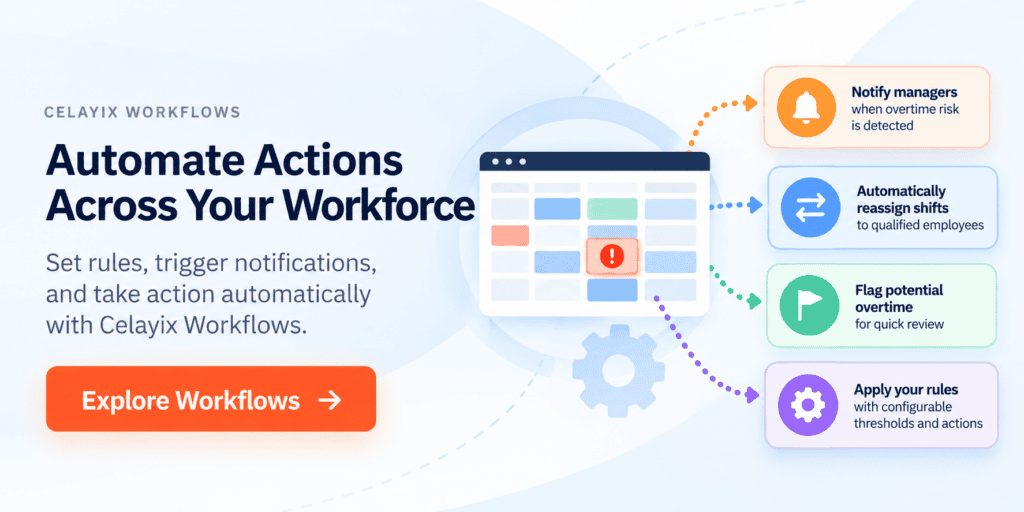
Organizations can define their overtime thresholds and determine what should happen when those thresholds are exceeded. Depending on your configured rules, Workforce Engine can:
- Notify a manager about potential overtime
- Flag the employee or shift for attention
- Automatically reassign the shift to another qualified employee
Instead of discovering unnecessary overtime after payroll is processed, managers can address the risk before the shift is worked.
Control Overtime Costs Before They Hit Payroll
Overtime isn’t always avoidable. Unexpected absences, demand changes, emergencies, and staffing shortages can all make additional hours necessary.
The goal isn’t necessarily to eliminate overtime. It’s to make sure managers know when it’s happening and can determine whether it’s the best staffing decision.
With earlier visibility, managers can assess available alternatives before committing to overtime hours. For example, a shift may be reassigned to an employee still within regular hours, helping the organization meet staffing needs without adding unnecessary premium labor costs.
For organizations managing hundreds or thousands of employee hours, those decisions can add up to meaningful labor-cost savings.
Reduce Manual Hour Tracking
Tracking who is approaching overtime can become a significant administrative burden.
Managers may compare schedules, review time and attendance information, or maintain their own spreadsheets just to understand who has room to work additional hours.
Overtime Guardian brings that logic into the scheduling process.
By monitoring employee hours against configurable rules, Workforce Engine reduces the need for managers to continually perform those calculations themselves. Managers can spend less time searching for potential problems and more time responding to the exceptions that require attention.
Apply Overtime Rules More Consistently
Overtime policies can vary by organization, employee group, location, collective agreement, or applicable labor requirements.
That’s why flexibility matters.
Overtime Guardian uses configurable thresholds and actions, allowing organizations to establish rules that reflect their workforce requirements rather than relying on a one-size-fits-all approach.
Automating those rules can also help promote consistency. Instead of depending on individual managers to remember when an employee is approaching a threshold, the system continuously monitors hours and responds according to the rules you’ve established.
For organizations operating in the United States, the U.S. Department of Labor provides information about federal overtime requirements under the Fair Labor Standards Act. Organizations should also consider applicable state, provincial, local, contractual, and industry-specific requirements when establishing scheduling and overtime policies.
Support Better Scheduling Decisions
Overtime Guardian isn’t only about reducing payroll costs. It also gives scheduling teams better information at the point of decision-making.
When overtime risk is visible earlier, managers can make more informed decisions about shift assignments, available employees, and labor allocation.
Combined with Celayix’s employee scheduling software, organizations can build schedules while accounting for workforce availability and operational requirements.
This can help teams:
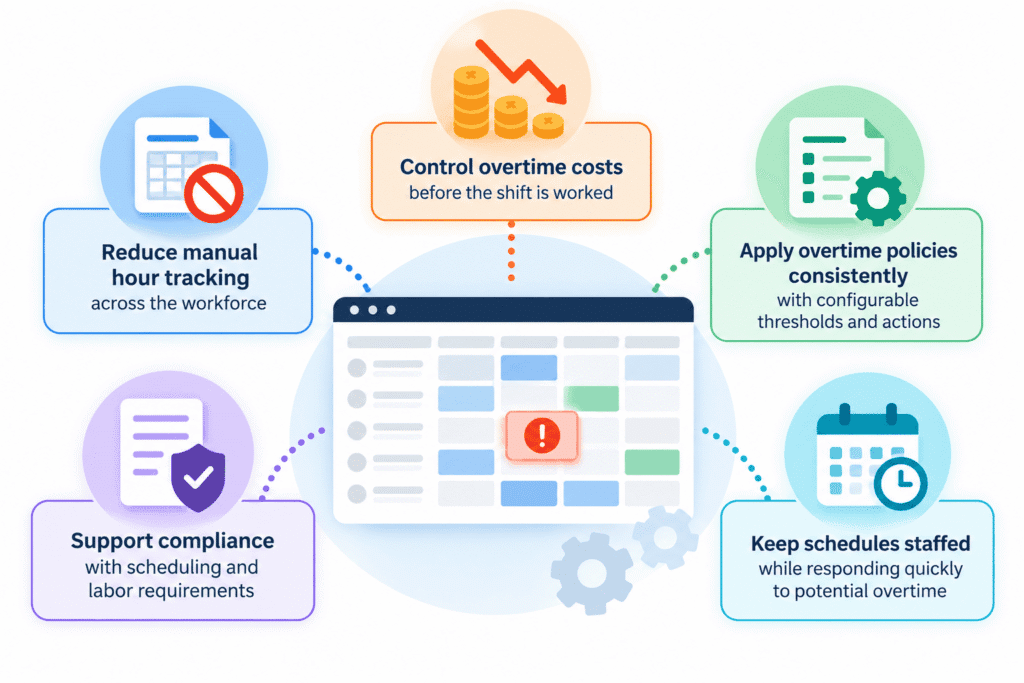
- Control overtime costs before the shift is worked
- Reduce manual hour tracking across the workforce
- Apply overtime policies consistently with configurable thresholds and actions
- Support compliance with scheduling and labor requirements
- Keep schedules staffed while responding quickly to potential overtime
Turn Overtime into an Actionable Scheduling Signal
Knowing that overtime happened last pay period is useful for reporting. Knowing that overtime is about to happen is much more useful for scheduling.
That’s the difference Overtime Guardian is designed to provide.
By monitoring hours and triggering predefined actions, Celayix Workforce Engine helps managers identify overtime risk while there’s still time to act.
Catch overtime earlier. Control labor costs. Keep schedules on track.