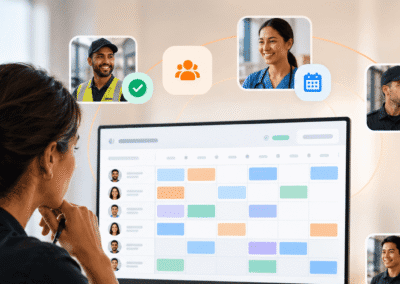

Managing shifts manually is one of the most time-consuming parts of running a workforce. Between tracking availability, covering absences, avoiding overtime, and staying compliant with labor laws, even a simple weekly schedule can quickly become complicated.
That is why more businesses are turning to automated employee scheduling software to streamline operations and improve shift management.
Automated scheduling tools do far more than replace spreadsheets. They help managers build smarter schedules more quickly, reduce labor costs, improve compliance, and create a better employee experience. For businesses that depend on hourly teams, this can make a major difference in both day-to-day efficiency and long-term retention.
Why Shift Management Is So Difficult Without Automation
Traditional shift scheduling often relies on manual processes such as spreadsheets, printed calendars, text messages, or last-minute calls. These methods take time and leave room for mistakes. Managers may accidentally schedule employees outside their availability, overlook overtime risks, or struggle to fill open shifts when someone calls out.
Manual scheduling also makes it harder to balance labor demand with business needs. Without accurate forecasting, companies may end up overstaffed during slow periods or understaffed during busy times. Both situations can hurt the bottom line and frustrate employees.
This is where employee scheduling automation creates real value.
1. Significant Time Savings for Managers
One of the biggest benefits of automated scheduling software is the amount of time it saves. Instead of building schedules from scratch, managers can use automation to generate shifts based on employee availability, skill sets, time-off requests, and business requirements.
Many businesses report that scheduling time can be reduced by up to 80%. What once took hours can often be done in minutes. This allows managers to spend less time on administrative work and more time supporting employees, serving customers, and improving operations.
By removing the need for manual spreadsheets, scheduling becomes faster, simpler, and far less stressful.
2. Lower Labor Costs Through Smarter Staffing
Labor is one of the largest operating expenses for many businesses, so even small improvements in scheduling can have a major financial impact. Automated scheduling software helps reduce labor costs by aligning staffing levels more closely with actual demand.
Using historical data such as sales trends and foot traffic, many platforms can predict staffing needs and build schedules accordingly. This helps businesses avoid overstaffing during slow times and understaffing during busy periods. It also helps limit unnecessary overtime by flagging scheduling decisions that could increase labor costs.
With better visibility into labor patterns, managers can make smarter staffing decisions that support both service levels and profitability.
3. Better Compliance and Reduced Risk
Staying compliant with labor laws can be difficult, especially for businesses with large teams, multiple locations, or complex scheduling requirements. Manual scheduling increases the risk of mistakes such as assigning excessive hours, missing required rest breaks, or overlooking expired certifications.
Automated employee scheduling software helps reduce that risk by building compliance checks into the scheduling process. The system can automatically flag potential violations before schedules are published, making it easier to follow labor laws and internal policies.
This not only protects the business from costly errors and penalties but also gives managers more confidence that schedules are fair, accurate, and compliant.
4. Improved Employee Satisfaction and Fairness
Better scheduling does not just help managers. It also improves the employee experience.
Modern scheduling tools often include self-service mobile apps that allow staff to set availability, request time off, and trade shifts within company rules. This gives employees more control over their schedules and reduces the frustration that often comes with manual scheduling systems.
When employees can easily communicate their preferences and handle common scheduling changes themselves, it creates a stronger sense of fairness and flexibility. That can lead to better morale, improved engagement, and lower turnover.
For many businesses, this employee-friendly experience is one of the most valuable reasons to adopt automated employee scheduling software.
5. Faster, Clearer Team Communication
Shift changes can create confusion when communication is slow or inconsistent. If updates are shared through phone calls, paper schedules, or group messages, employees may miss important information.
Automated scheduling software solves this problem by sending real-time notifications directly to employees’ mobile devices. When a shift changes, a schedule is updated, or a new opening becomes available, team members can be notified instantly.
This improves communication across the workforce, reducing no-shows, misunderstandings, and last-minute confusion. Everyone stays informed, and managers spend less time chasing confirmations.
6. Easier Coverage for Unexpected Absences
Unexpected absences are a constant challenge in shift-based workplaces. Finding a replacement quickly can be stressful, especially when managers have to contact employees individually.
Automated scheduling tools simplify this process by sending notifications to qualified employees who are available to cover the shift. Some platforms also support shift bidding or shift swapping, allowing employees to claim open shifts or exchange shifts within approved guidelines.
This makes absence management faster and more efficient, while reducing managers’ workload.
Key Features That Make Automated Scheduling Effective
The value of automated scheduling comes from the specific tools built into the platform. Some of the most useful features include:
Auto-Scheduling
One-click schedule generation helps managers create optimized schedules quickly based on availability, roles, and business needs.
Predictive Labor Analytics
Historical data can be used to forecast demand and recommend staffing levels, helping businesses schedule more accurately.
Real-Time Updates
Cloud-based systems instantly update schedules so both managers and employees always have access to the latest version.
Shift Bidding and Swapping
Employees can manage their own shifts more easily, while still staying within company rules and approval workflows.
Streamline Employee Scheduling with Automation
Effective shift management requires speed, accuracy, flexibility, and clear communication.
Manual scheduling methods often fall short in all four areas, creating extra work for managers and frustration for employees. Automated employee scheduling software improves shift management by streamlining scheduling, lowering labor costs, reducing compliance risks, and giving employees greater control over their work lives.
For businesses looking to save time, improve workforce efficiency, and build a better scheduling experience, automation is no longer just a convenience. It is a practical competitive advantage.