
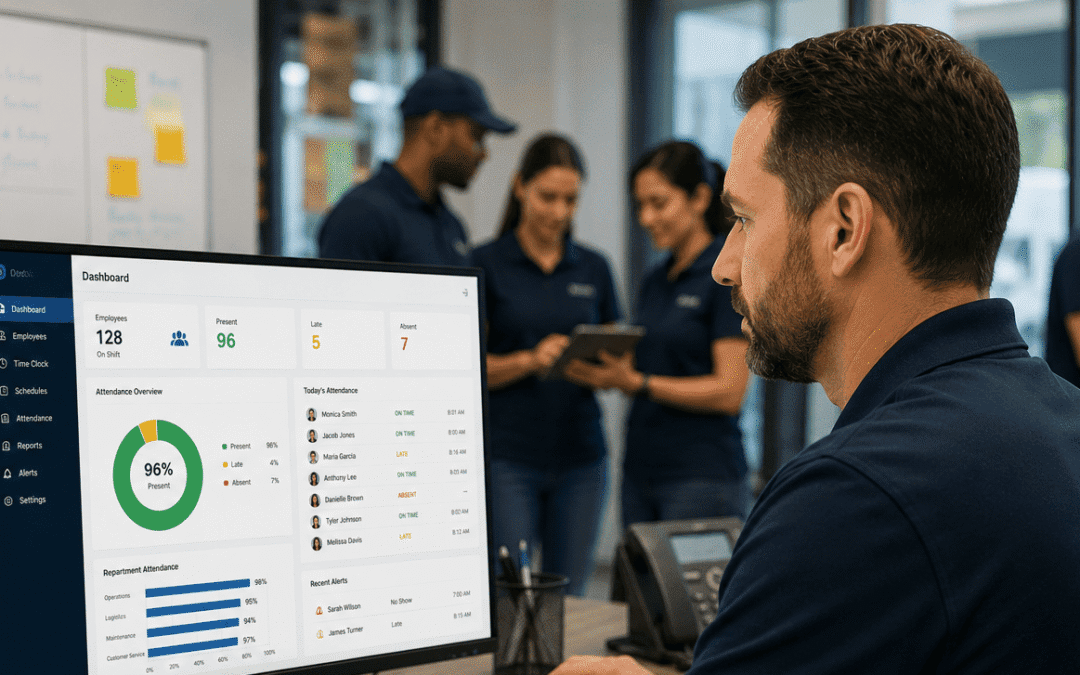
Employee attendance tracking is about more than recording hours worked. For organizations that rely on shift-based employees, attendance data provides critical insight into workforce reliability, staffing levels, labor costs, compliance, and operational performance.
Without accurate employee attendance tracking, managers often struggle to identify attendance patterns, respond to staffing shortages, verify hours worked, and maintain workforce accountability.
Modern attendance management software gives organizations real-time visibility into employee attendance while reducing administrative workload and improving workforce performance.
What Is Employee Attendance Tracking and Management?
Employee attendance tracking is the process of recording and monitoring employee work attendance, while employee attendance management involves using that information to improve workforce performance, accountability, and operational efficiency.
Organizations track employee attendance to monitor:
- Shift start times
- Shift end times
- Breaks and meal periods
- Tardiness
- Absences
- No-shows
- Schedule adherence
- Hours worked
Attendance tracking helps organizations understand whether employees are working their scheduled shifts and provides the data needed for payroll, compliance, workforce planning, and performance management.
While attendance tracking was once handled using paper timesheets or punch clocks, most organizations now rely on attendance management software to improve accuracy, visibility, and efficiency.
Why Employee Attendance Tracking Matters
Accurate employee attendance tracking affects nearly every aspect of workforce management.
Improve Workforce Visibility
Managers need real-time insight into who is working, who is late, and where staffing gaps exist.
Without visibility into attendance, organizations often react to problems after they have already affected operations.
Reduce Payroll Errors
Accurate attendance records help ensure employees are paid correctly for hours worked while reducing payroll disputes and manual payroll adjustments.
Improve Workforce Accountability
Employees are more likely to follow attendance expectations when attendance tracking is accurate, transparent, and consistently applied.
Support Compliance
Attendance records help organizations maintain documentation for labor regulations, overtime requirements, break policies, and workplace audits.
Control Labor Costs
Attendance data helps managers identify trends that contribute to overtime, overstaffing, understaffing, and scheduling inefficiencies.
Common Methods for Tracking Employee Attendance
Organizations use a variety of methods to track employee attendance depending on their workforce structure and operational requirements.
Manual Timesheets
Employees record their own hours worked using paper or spreadsheet-based systems.
While inexpensive, manual attendance tracking often increases administrative work and creates opportunities for errors.
Physical Time Clocks
Traditional punch clocks remain common in some workplaces but typically offer limited reporting and visibility into the workforce.
Biometric Attendance Systems
Fingerprint and facial recognition systems help improve attendance accuracy while reducing buddy punching and time theft.
Mobile Attendance Tracking
Mobile attendance applications allow employees to clock in and out on smartphones while providing managers with real-time visibility into attendance.
For mobile and field-based workforces, mobile attendance tracking often provides the greatest flexibility and operational control.
Key Features of Attendance Management Software
Modern attendance management software provides significantly more functionality than traditional time clocks.
Organizations looking to improve employee attendance management should prioritize solutions that offer real-time visibility, automation, and workforce insights.
Employee Attendance Monitoring in Real Time
Employee attendance monitoring gives managers immediate visibility into workforce activity.
Rather than waiting until the end of a shift or pay period, organizations can identify attendance issues as they occur and respond quickly to staffing gaps.
Managers can instantly see:
- Who has clocked in
- Who is late
- Who missed a shift
- Which locations require coverage
- Attendance exceptions
Real-time monitoring helps organizations maintain operational continuity and reduce disruption.
GPS Verification and Geofencing
Many attendance management systems use GPS technology to verify employees’ locations during clock-in and clock-out.
Geofencing creates virtual boundaries around approved work locations and helps ensure employees are physically present when recording attendance.
This helps organizations:
- Reduce time theft
- Improve attendance accuracy
- Verify employee locations
- Increase accountability
Mobile Clock-In and Clock-Out
Employees can record attendance directly from their smartphones without requiring dedicated hardware.
This is particularly valuable for:
- Security companies
- Healthcare organizations
- Home care providers
- Staffing agencies
- Field service teams
Attendance Alerts and Notifications
Automated alerts notify managers when:
- Employees miss shifts
- Employees arrive late
- Attendance exceptions occur
- Coverage gaps develop
These notifications allow managers to address attendance issues before they affect operations.
Attendance Reporting and Analytics
Reporting tools help managers analyze attendance trends and identify opportunities for improvement.
Common reports include:
- Attendance summaries
- Tardiness reports
- Overtime reports
- Schedule adherence reports
- Labor utilization reports
- Attendance exception reports
How Employee Attendance Management Improves Workforce Performance
Attendance management is about more than recording attendance data.
Organizations can use attendance information to improve workforce planning, labor efficiency, and operational decision-making.
Identify Attendance Patterns
Managers can identify recurring attendance trends such as:
- Frequent tardiness
- High absence rates
- Department-specific attendance issues
- Coverage gaps
- Staffing shortages
This allows organizations to address issues proactively.
Improve Scheduling Decisions
Attendance data helps managers create more reliable schedules and make informed staffing decisions.
Organizations that connect scheduling and attendance systems gain greater visibility into workforce performance and schedule adherence.
Reduce Administrative Work
Automated attendance management reduces many of the manual processes associated with timesheets, attendance records, and payroll reconciliation.
Improve Accountability
Employees gain greater clarity regarding attendance expectations while managers maintain consistent attendance records.
How to Improve Employee Attendance with Better Tracking and Visibility
Organizations often focus on attendance policies when seeking to improve employee attendance. While clear expectations are important, visibility and accountability play an equally important role.
When managers can accurately track employee attendance, they can identify attendance trends before they become larger workforce challenges.
Modern employee attendance management systems help organizations improve attendance by:
- Providing employees with clear schedule visibility
- Sending automated reminders before shifts
- Tracking attendance in real time
- Identifying recurring attendance patterns
- Improving workforce accountability
- Reducing scheduling confusion
For many organizations, attendance issues are not caused by a lack of effort but by communication gaps, inconsistent processes, and limited visibility into workforce activity.
By combining effective attendance management practices with modern technology, organizations can create a more reliable and engaged workforce.
Managing Employee Time and Attendance Across Multiple Locations
Managing employee time and attendance becomes increasingly difficult as organizations grow, add locations, or support mobile workforces.
Attendance management software centralizes scheduling, attendance records, employee communications, and reporting into a single platform, giving managers greater visibility and control over workforce operations.
For organizations managing employees across multiple sites, centralized attendance management helps:
- Improve workforce visibility
- Standardize attendance processes
- Reduce administrative work
- Improve reporting accuracy
- Strengthen compliance efforts
- Support better staffing decisions
This is particularly important for healthcare providers, security companies, hospitality organizations, staffing firms, and field service operations.
Attendance Tracking Challenges
Many organizations struggle with attendance tracking because they rely on outdated processes.
Common challenges include:
- Manual recordkeeping
- Payroll discrepancies
- Buddy punching
- Time theft
- Limited workforce visibility
- Delayed attendance reporting
- Multi-location workforce management
Modern attendance management software helps organizations overcome these challenges through automation, GPS verification, real-time monitoring, and integrated workforce management tools.
Choosing Attendance Management Software
When evaluating attendance management software, organizations should look for features such as:
- Mobile clock-in and clock-out
- GPS verification
- Geofencing
- Employee attendance monitoring
- Real-time attendance visibility
- Automated notifications
- Attendance reporting
- Payroll integration
- Multi-location support
- Workforce scheduling integration
- Compliance tools
The best solutions combine employee attendance tracking, scheduling, communication, and reporting into a single workforce management platform.
Improve Employee Attendance Management with the Right Tools
Accurate employee attendance tracking helps organizations improve workforce visibility, reduce payroll errors, maintain compliance, and make better staffing decisions.
Modern attendance management software provides managers with real-time insights into workforce activity while reducing the administrative burden of manual attendance processes.
Whether your goal is tracking employee attendance, managing employee time and attendance, improving workforce accountability, or increasing operational visibility, the right attendance management solution can help create a more efficient, reliable, and productive workforce.

Frequently Asked Questions About Employee Attendance Tracking
What is attendance tracking software?
Attendance tracking software records employee attendance and provides organizations with tools to monitor attendance, generate reports, improve workforce visibility, and support payroll processing.
How can organizations track employee attendance more effectively?
Organizations can track employee attendance more effectively by replacing manual processes with attendance management software that provides mobile clock-in options, GPS verification, attendance reporting, and real-time workforce visibility.
What is the difference between attendance tracking and attendance management?
Attendance tracking focuses on recording employee attendance data, while employee attendance management includes monitoring attendance trends, improving accountability, managing policies, and using attendance data to make workforce decisions.
How does mobile attendance tracking work?
Employees clock in and out via a mobile application, enabling managers to track attendance in real time.
What is geofencing?
Geofencing creates a virtual boundary around a work location and verifies that employees are physically present when recording attendance.
How does attendance software reduce payroll errors?
Attendance software automatically captures hours worked and transfers accurate records into payroll systems, reducing manual entry and calculation errors.
Can attendance tracking help reduce time theft?
Yes. GPS verification, geofencing, biometric authentication, and automated attendance records help improve accountability and reduce time theft.