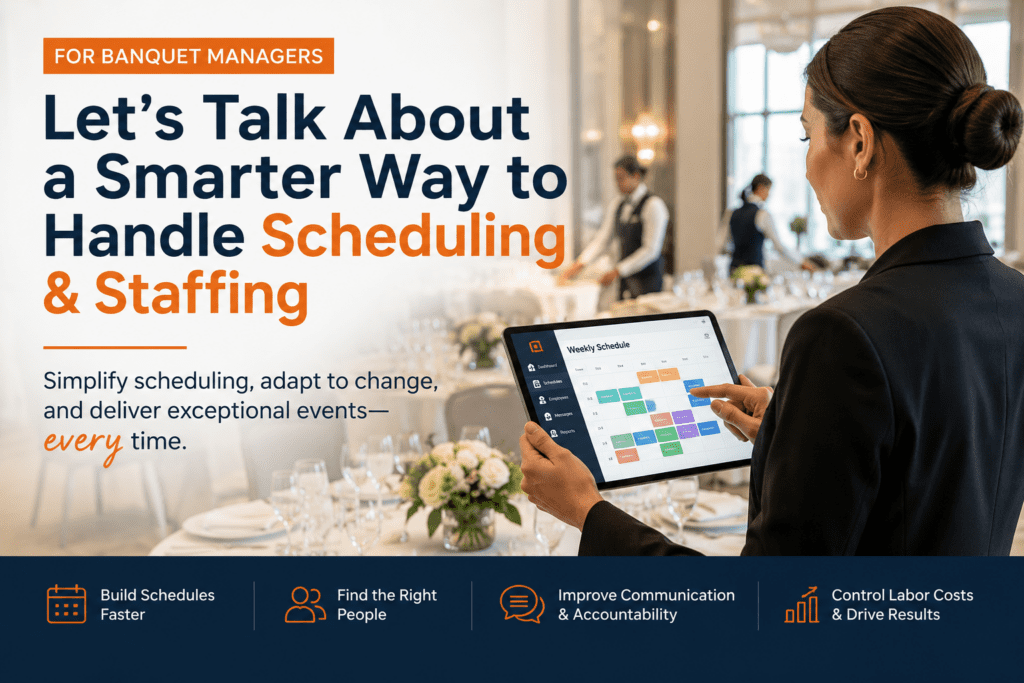
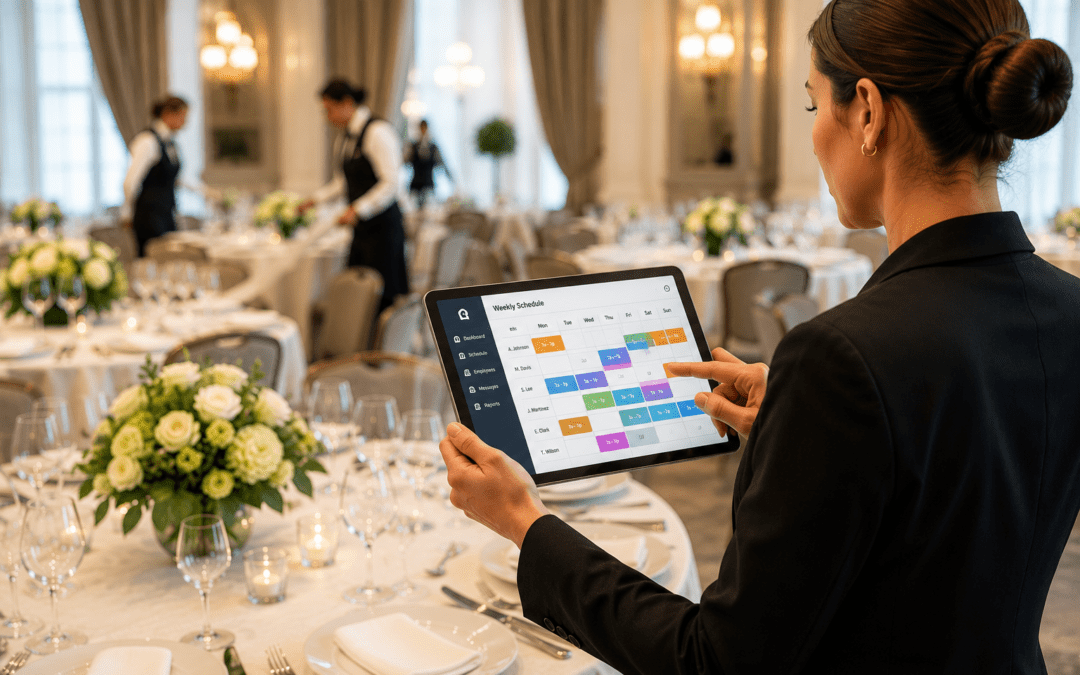
It’s 3 PM.
A wedding reception starts in three hours. Two servers just called in sick. Your setup crew is behind schedule, one bartender is approaching overtime, and a last-minute guest count increase means you suddenly need extra floor staff.
For banquet managers, this isn’t unusual.
Whether you’re coordinating weddings, conferences, corporate events, galas, or private parties, managing banquet operations means balancing constantly moving parts while still delivering a flawless guest experience. And when scheduling is still handled through spreadsheets, texts, phone calls, or paper schedules, even small disruptions can quickly become operational chaos.
Today’s hospitality environment demands faster communication, smarter staffing decisions, and more flexible workforce management.
That’s why many banquet and event teams are turning to automated scheduling solutions to simplify staffing operations, reduce labor inefficiencies, and improve event execution.
Why Banquet Scheduling has Become More Difficult
Banquet operations have always been demanding, but staffing challenges across hospitality have made the job significantly harder.
Managers today are dealing with:
- Labor shortages
- Last-minute callouts
- High employee turnover
- Seasonal staffing fluctuations
- Rising labor costs
- Overtime pressure
- Complex event coordination
- Employee scheduling preferences
At the same time, guest expectations continue to rise. Clients expect seamless service, fast execution, and perfectly staffed events regardless of attendance changes or operational disruptions.
For banquet managers, there’s little room for error.
A single staffing gap can affect:
- Guest experience
- Service speed
- Setup timelines
- Event flow
- Employee morale
- Labor costs
The challenge is no longer simply filling shifts. It’s building schedules that are flexible, responsive, and efficient enough to adapt in real time.
The Hidden Cost of Manual Scheduling
Many banquet teams still rely on:
- Excel spreadsheets
- Group texts
- Whiteboards
- Phone calls
- Paper schedules
- Manual shift replacement processes
While these methods may seem manageable at first, they often create larger operational problems over time. Manual scheduling can lead to:
Staffing Gaps
When schedules change quickly, communication delays can leave shifts uncovered.
Overtime Issues
Managers frequently rely on the same dependable employees, increasing overtime costs and employee burnout.
Scheduling Errors
Double-booked employees, missed shifts, and incorrect staffing levels become more common.
Slow Response Times
Last-minute changes require managers to spend valuable time calling or messaging employees individually.
Reduced Employee Satisfaction
Poor communication and inconsistent scheduling can frustrate staff and increase turnover.
In banquet operations, where timing and coordination are critical, these inefficiencies can directly affect service quality and profitability.
Common Banquet Staffing Challenges
Every event has its own staffing requirements. A corporate conference may require different skill sets than a wedding reception or large fundraising gala.
Banquet managers must constantly balance:
- Event size
- Staff availability
- Employee qualifications
- Setup and teardown schedules
- Overtime limits
- Compliance requirements
- Changing guest counts
Here are some of the most common operational challenges banquet managers face.
Last-Minute Callouts
Unexpected absences can force managers into emergency staffing mode just hours before an event begins. Without a fast replacement process, managers often scramble to contact available employees manually.
Seasonal Demand Fluctuations
Hospitality demand changes dramatically throughout the year. Wedding season, holidays, conferences, and tourism peaks can create staffing spikes that are difficult to manage manually.
Skill-Based Staffing Needs
Not every employee is qualified for every role. Managers must ensure bartenders, captains, servers, setup crews, and supervisors are assigned appropriately.
Communication Delays
If schedule updates are not communicated instantly, employees may miss changes or arrive unprepared.
Labor Cost Control
Balancing service quality with labor budgets is one of the biggest operational pressures banquet managers face. Overstaffing increases costs. Understaffing hurts guest experience. Finding the right balance manually is difficult.
How Automated Scheduling Improves Banquet Operations
Modern shift management software helps banquet managers simplify scheduling while improving communication and operational visibility. Instead of relying on disconnected systems and manual coordination, managers can automate many of the most time-consuming scheduling tasks.
Shift management solutions help banquet teams:
- Build schedules faster
- Fill open shifts quickly
- Reduce overtime
- Improve communication
- Match employees based on skills and availability
- Respond to changes in real time
- Increase staffing visibility
The result is a more organized, responsive, and efficient operation.
Faster Scheduling and Shift Management
Banquet scheduling often changes daily. Managers need tools that allow them to react quickly without rebuilding schedules from scratch. Automated scheduling software makes it easier to:
- Create schedules in minutes
- Notify employees instantly
- Adjust staffing levels quickly
- Fill open shifts faster
- Manage multiple events simultaneously
Instead of spending hours texting employees individually, managers can send shift opportunities directly to qualified staff. This dramatically reduces administrative workload.
Better Communication Across Teams
Clear communication is critical in banquet operations. Employees need immediate access to:
- Shift assignments
- Schedule changes
- Event details
- Timing updates
- Role responsibilities
Modern scheduling platforms improve communication through:
- Mobile notifications
- Real-time schedule updates
- Employee self-service tools
- Shift confirmations
- Automated reminders
This reduces confusion while helping teams stay aligned during fast-moving events.
Smarter Staffing Decisions
Banquet managers often need to staff events based on:
- Experience level
- Certifications
- Position requirements
- Availability
- Labor budgets
Automated workforce management tools help managers assign the right employees to the right shifts.
This improves:
- Service consistency
- Operational efficiency
- Team accountability
- Guest satisfaction
It also helps reduce scheduling conflicts and unnecessary overtime.
Reducing Overtime and Labor Costs
Labor is one of the largest expenses in hospitality. Without visibility into employee hours and staffing patterns, overtime costs can escalate quickly.
Scheduling software helps banquet managers monitor:
- Employee hours
- Overtime thresholds
- Shift distribution
- Staffing coverage
- Labor allocation
This allows managers to make more informed staffing decisions before labor costs become a problem.
Supporting Employee Retention
Hospitality employees increasingly expect flexibility, transparency, and mobile access to schedules.
Outdated scheduling methods can create frustration and contribute to turnover.
Automated scheduling systems improve employee experience by allowing staff to:
- View schedules remotely
- Receive instant updates
- Pick up available shifts
- Submit availability changes
- Improve schedule visibility
Better scheduling experiences can help create a more engaged and reliable workforce.
Real-World Banquet Scenarios Where Scheduling Technology Helps
Consider a few common banquet management situations.
Wedding Reception Staffing Changes
A wedding guest count increases unexpectedly two days before the event.
Managers need additional servers and setup staff quickly.
With automated scheduling software, open shifts can immediately be sent to qualified employees, reducing delays and staffing gaps.
Conference Event Expansion
A multi-day corporate conference extends operating hours.
Managers can quickly adjust schedules, monitor overtime exposure, and maintain staffing coverage without rebuilding schedules manually.
Last-Minute Callouts
A bartender calls in sick hours before an event.
Instead of contacting employees individually, managers can automatically notify available qualified replacements.
These types of real-time staffing adjustments help banquet teams remain agile under pressure.
Why Banquet Managers are Moving Toward Shift Automation
Banquet operations are becoming increasingly dynamic.
Manual scheduling processes often cannot keep up with:
- Fast operational changes
- Larger event volumes
- Employee communication demands
- Rising labor costs
- Staffing unpredictability
Automation helps banquet teams move from reactive scheduling to proactive workforce management.
Instead of constantly scrambling to solve staffing issues, managers gain:
- Better visibility
- Faster response times
- Improved labor control
- More reliable communication
- Stronger operational consistency
That creates a smoother experience for both employees and guests.
A Smarter Approach to Banquet Staffing
Exceptional banquet experiences depend on strong coordination behind the scenes.
When scheduling systems are outdated or disconnected, managers spend more time resolving staffing issues and less time on event execution. Modern workforce management tools help banquet managers simplify operations while improving staffing flexibility, communication, and labor efficiency.
For hospitality teams still relying on spreadsheets, phone calls, and last-minute scheduling adjustments, now may be the right time to modernize the scheduling process.
Celayix helps banquet and hospitality teams streamline scheduling, improve workforce communication, and manage staffing more efficiently across every event.
Ready to improve banquet staffing operations?
Explore how Celayix can help your team reduce scheduling chaos, improve labor visibility, and deliver better event experiences.