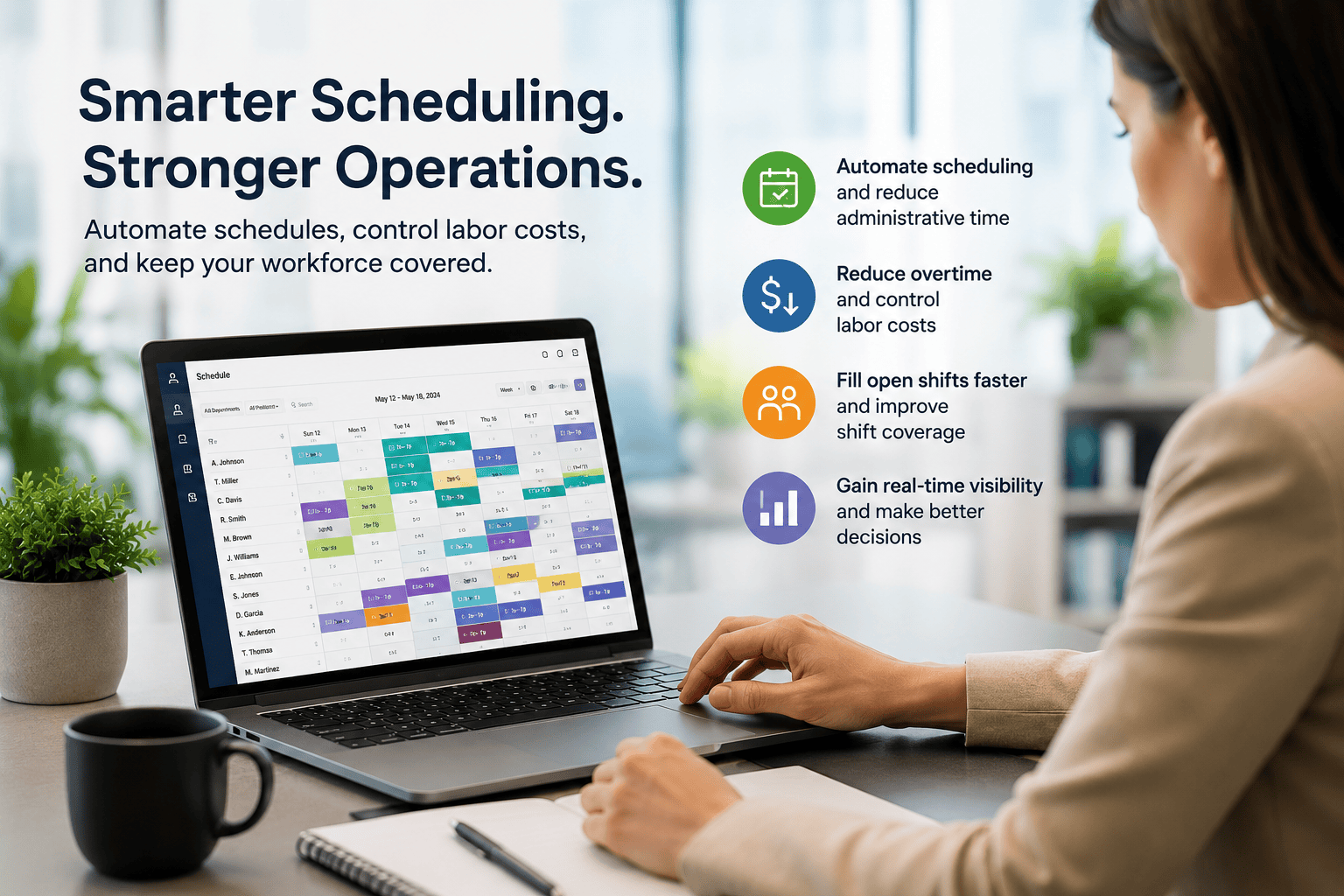

Time is one of the most valuable resources in any organization. Yet many businesses lose hours every week to manual processes, inefficient scheduling, and administrative tasks that could be automated.
For organizations managing shift-based workforces, these inefficiencies quickly become expensive. Managers spend valuable time creating schedules, filling last-minute vacancies, correcting payroll errors, and responding to staffing changes instead of focusing on operations, employee performance, and customer service.
Saving time isn’t just about improving productivity; it’s about creating more efficient operations, controlling labor costs, and giving managers the tools they need to make better decisions.
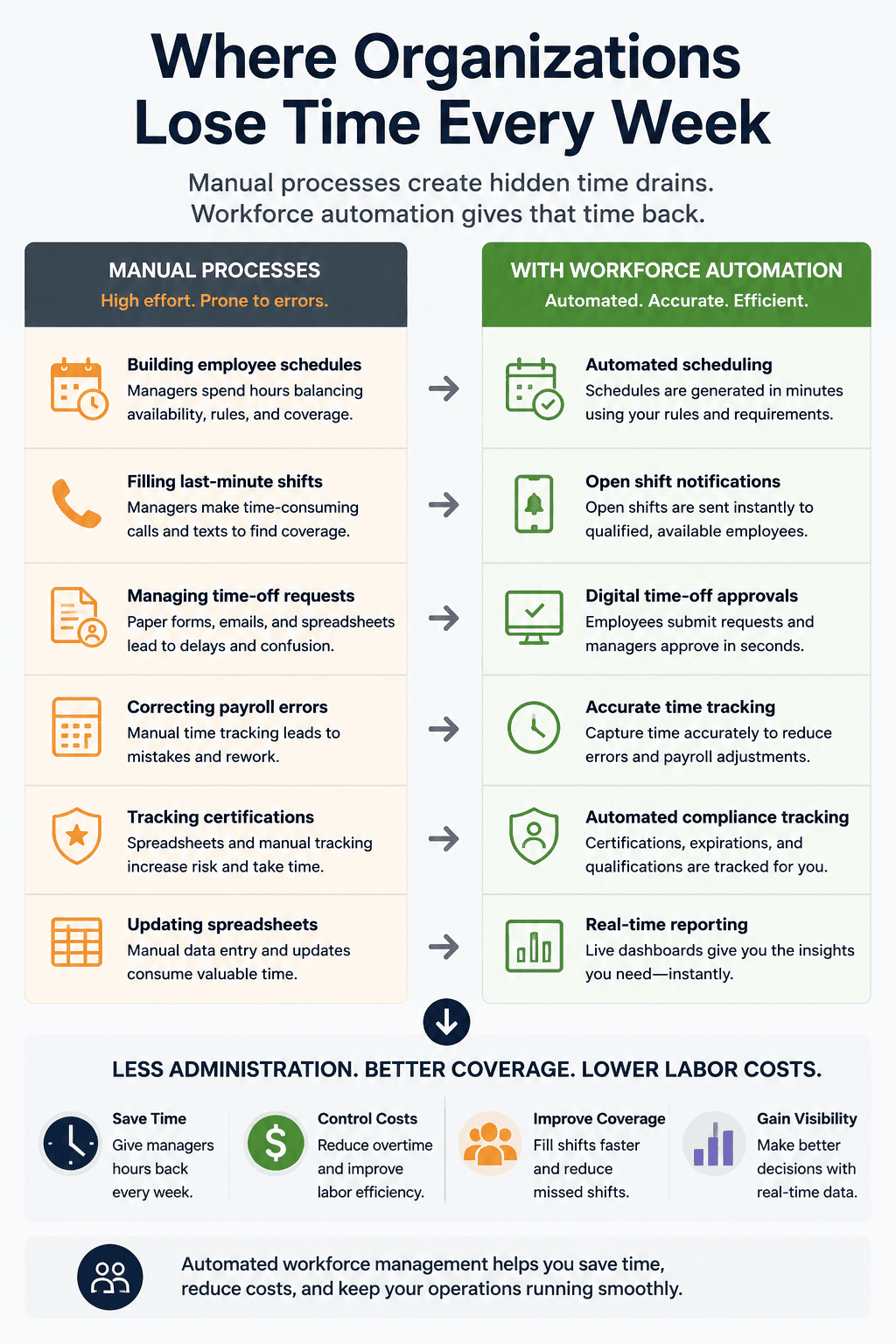
Where Organizations Lose Time
Many businesses don’t realize how much time is lost to repetitive administrative work until they measure it.
Common time-consuming activities include:
- Creating and adjusting employee schedules
- Calling or texting employees to fill open shifts
- Managing time-off requests
- Correcting timesheets and payroll discrepancies
- Tracking certifications and compliance requirements
- Updating multiple spreadsheets and manual reports
Each task may only take a few minutes, but across multiple locations, departments, and managers, these administrative responsibilities add up to dozens of hours every week.
The more complex your workforce becomes, the greater the impact of manual processes.
Streamline Scheduling with Automation
Employee scheduling is often one of the largest administrative burdens for managers.
Building schedules manually requires balancing employee availability, labor budgets, overtime limits, certifications, union rules, customer demand, and shift coverage, all while accommodating last-minute changes.
Modern workforce management software automates much of this complexity.
Instead of rebuilding schedules from scratch, managers can:
- Automatically generate schedules based on business rules
- Fill open shifts faster
- Prevent overtime before it happens
- Ensure qualified employees are assigned to each shift
- Respond quickly to staffing changes
Automation reduces administrative effort while giving managers greater control over labor costs and workforce coverage.
Improve Communication Across Your Workforce
Communication delays create unnecessary work.
When managers rely on phone calls, emails, or paper schedules, every schedule change becomes another administrative task.
Centralized employee communication helps organizations:
- Notify employees instantly about schedule updates
- Broadcast open shifts to qualified workers
- Reduce missed shifts
- Eliminate confusion caused by outdated schedules
- Keep employees informed from any location
Real-time communication helps organizations respond faster while reducing the time managers spend coordinating staff.
Reduce Administrative Work Through Digital Workflows
Manual paperwork slows down every stage of workforce management.
Whether it’s approving time-off requests, tracking employee certifications, or managing availability changes, paper-based processes increase the likelihood of delays and errors.
Digital workflows simplify routine administrative tasks by allowing managers to:
- Review and approve requests electronically
- Track employee qualifications automatically
- Maintain accurate employee records
- Reduce duplicate data entry
- Access workforce information from a single system
Less manual administration means more time for strategic planning and operational improvement.
Use Workforce Data to Make Faster Decisions
Organizations generate valuable workforce data every day, but manual reporting often makes it difficult to use effectively.
Real-time dashboards and reporting provide visibility into:
- Labor costs
- Overtime trends
- Staffing levels
- Schedule coverage
- Attendance patterns
- Workforce productivity
Instead of spending hours compiling reports, managers can quickly identify issues, adjust schedules, and make informed decisions that improve operational performance.
Minimize Errors Before They Become Costly
Manual scheduling and workforce administration often lead to avoidable mistakes.
Common issues include:
- Scheduling unqualified employees
- Accidental overtime
- Double-booked shifts
- Payroll discrepancies
- Compliance violations
These mistakes consume additional administrative time while increasing labor costs.
Automated scheduling rules help organizations prevent many of these errors before schedules are published, improving accuracy while reducing the need for corrections.
Give Managers More Time to Lead
Managers create the greatest value when they’re leading people, not completing administrative tasks.
By reducing the time spent on scheduling, reporting, and workforce administration, organizations enable managers to focus on:
- Coaching employees
- Improving customer service
- Supporting daily operations
- Planning workforce needs
- Driving business performance
The result is a more productive organization with stronger operational oversight.
The Business Impact of Saving Time
Saving time creates benefits that extend far beyond productivity.
Organizations that streamline workforce management can:
- Deliver better shift coverage
- Reduce unnecessary labor costs
- Improve scheduling accuracy
- Respond faster to operational changes
- Decrease administrative workload
- Improve employee satisfaction through clearer communication
- Gain greater visibility into workforce performance
Every hour saved on administration is an hour that can be invested in serving customers, supporting employees, and growing the business.
Save Time by Simplifying Workforce Management
Operational complexity doesn’t have to result in administrative burden.
With the right workforce management solution, organizations can automate routine scheduling tasks, improve workforce visibility, reduce manual processes, and help managers make faster, more informed decisions.
The result is a workforce that’s easier to manage, more efficient to operate, and better positioned to meet changing business demands.
If your organization is looking for ways to reduce administrative effort while improving workforce performance, modern scheduling and workforce management software can help you save time where it matters most.