

Celayix Home » The Importance Of Self-Scheduling In Workforce Management

The Importance Of Self-Scheduling In Workforce Management

Self-scheduling allows your employees to choose the shifts that work for them. As a scheduler, it can help you speed up your workforce management, and see better results from your employees! Have a look at the infographic below to learn more!

Celayix employee scheduling software offers multiple ways to automate and improve your scheduling processes. One of the most used methods we offer is self-scheduling, which we break down below in our self-scheduling infographic! Take a look at how it works, as well as how it can benefit your organization!
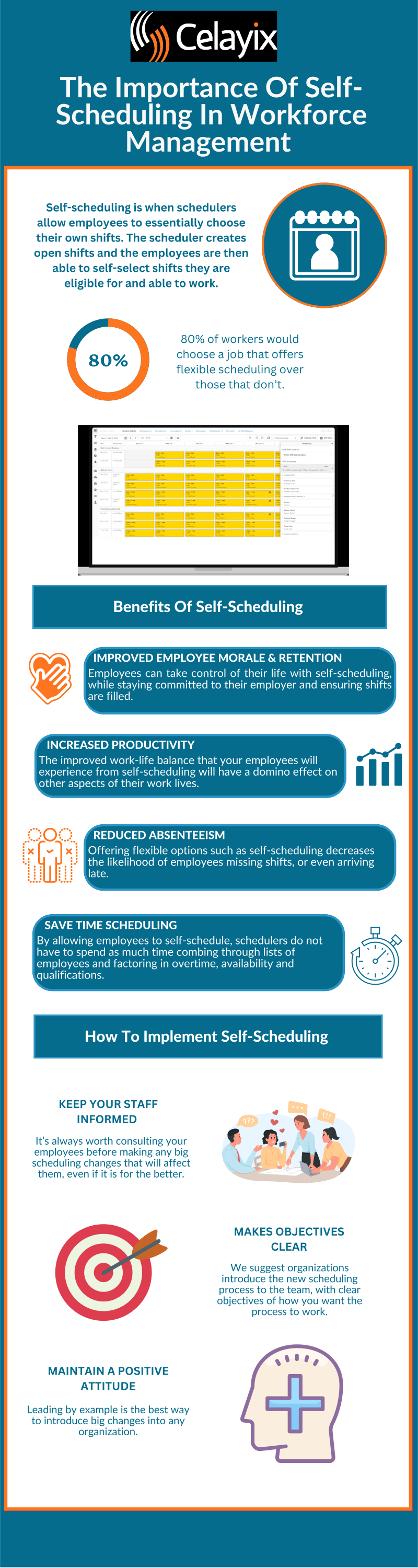
self scheduling infographic

Self-scheduling is proven to benefit both managers and employees as management can automate their shift allocation while employees are empowered to choose the shifts that they want- creating a more flexible environment for both parties. If you’d like to read more on how self-scheduling works, take a look at our dedicated blog post here. You can also visit our Help Centre Article that covers everything you need to know.
Get Started with Celayix Call to Action
Written by Conor Bourke

Written by Conor Bourke

Conor is a Digital Marketing Coordinator at Celayix that focuses on PPC, social media and website management.

You may also like…

Employee Scheduling Metrics: 7 KPIs Every Workforce Manager Should Track

Employee Scheduling Metrics: 7 KPIs Every Workforce Manager Should Track

Monitor a combination of operational, financial, and employee-focused KPIs for a complete picture of workforce performance. Together, these metrics help managers identify trends, improve scheduling decisions, and continuously optimize operations.
Staff Scheduling: A Critical Foundation for Organizational Performance

Staff Scheduling: A Critical Foundation for Organizational Performance

For shift-based organizations, every schedule affects labor cost, coverage, compliance, employee experience, and customer satisfaction. When scheduling is done manually, managers spend too much time reacting to problems. When scheduling is automated and integrated with time, attendance, payroll, and analytics, organizations gain greater control over their operations
How to Handle Employee No-Call, No-Shows: Best Practices for Managers

How to Handle Employee No-Call, No-Shows: Best Practices for Managers

What constitutes a no-call, no-show, why it happens, how to respond, and what organizations can do to prevent it in the future.
No results found.