

Accurate tracking and attestation of employee breaks and meal periods help protect both your employees and your organization. It encourages employees to take the required rest they need to stay safe and productive, thereby reducing payroll disputes, legal risk, and compliance issues.
Break Tracking and Why It’s Important
Break tracking is the process of recording and monitoring when employees take their meal and rest breaks during a shift to ensure they occur at the correct time, last the appropriate duration, and are properly documented.
Improve Compliance
Many state governments have regulations that mandate employers to provide specific types of breaks to their employees during work hours. These break laws are designed to ensure employees’ well-being, safety, and productivity by allowing them time to rest and recharge.
These laws do not universally apply to all industries or to all types of workers. They can vary by industry, the type of work performed, and whether the employee is classified as exempt or non-exempt under the federal Fair Labor Standards Act (FLSA).
Reduce Risk
In recent years, break compliance has become a major source of class-action litigation, particularly in states like California, making accurate tracking and documentation more critical than ever.
Increase Employee Well-Being
Break tracking supports employee well-being by ensuring workers consistently receive the rest they are entitled to. This helps cut fatigue, sharpen focus, and maintain overall performance and health. It also promotes fairness by preventing missed or shortened breaks, creating a more equitable and supportive work environment.
Some State-Specific Break and Meal Requirements
While the FLSA does not require employers to offer breaks, it does specify that short breaks (typically 5 to 20 minutes) must be paid, and meal breaks (usually 30 minutes or more) can be unpaid only if employees are fully relieved of their duties.
The complexity of break compliance largely stems from state laws, which often impose stricter, more detailed requirements. State regulations vary significantly.
California Break Rules
California’s break laws are among the most stringent in the country. Employees are entitled to a 30-minute unpaid meal break after five hours of work and a second meal break after ten hours. They must also receive a paid 10-minute rest break for every four hours worked.
If employers fail to provide these breaks properly, they may be required to pay a penalty equal to one additional hour of wages per violation.
Washington Break Rules
Washington state also has clear requirements, mandating a 30-minute meal break for shifts over five hours and a paid 10-minute rest break for every four hours worked, typically scheduled near the midpoint of the shift.
Other states, such as New York and Illinois, have their own variations, often focusing on meal breaks and specific timing requirements. Break compliance includes not just duration, but also timing—many states require breaks within specific windows.
As regulations continue to evolve and enforcement becomes stricter, effective break management is essential to avoid penalties and maintain a fair, productive workplace.
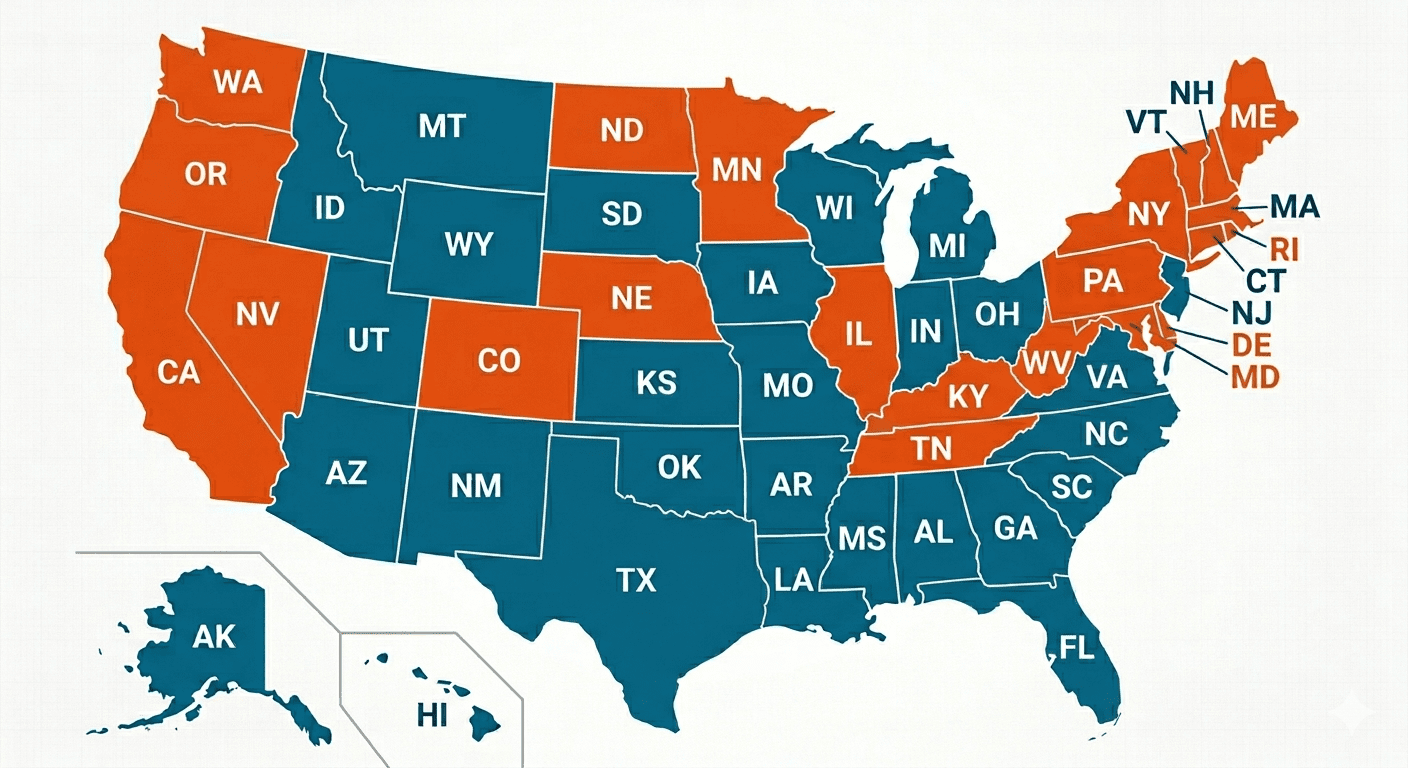
US States with break laws (in Orange)
Best Practices for Tracking Employee Breaks and Meal Periods
Establish Clear, Compliant Break Policies
Effectively tracking employee breaks and meal periods starts with well-defined policies. Employers should clearly outline when breaks must occur, how long they must last, and whether they are paid or unpaid. These policies must align with both federal guidelines and state-specific requirements, especially in jurisdictions with strict timing rules.
Enforce Break Timing Windows
A key best practice is to enforce not only the duration of breaks but also when they occur. Many states require meal breaks within specific timeframes during a shift. Systems should be configured to prompt employees when breaks are due and prevent late or missed breaks, ensuring compliance is built into daily operations.
Enable Real-Time Monitoring and Alerts
Real-time visibility into break activity allows managers to identify issues as they happen. Employers should use systems that flag missed, short, or delayed breaks and send alerts to supervisors. This enables immediate corrective action before issues escalate into compliance violations.
Capture and Document Exceptions
When breaks are missed, interrupted, or taken late, it is essential to document what happened. Systems should record these exceptions and require employee acknowledgment or supervisor review. This creates a reliable audit trail and demonstrates due diligence in the event of inspections or disputes.
Conduct Regular Compliance Audits
Periodic reviews of time and attendance data help identify patterns such as frequent missed breaks or inconsistent enforcement across teams or locations. These insights enable organizations to address root causes, whether operational challenges or training gaps.
Leverage Technology to Automate Compliance
Modern workforce management systems can automate break handling, enforce rules, and maintain accurate records. By reducing reliance on manual processes, employers can minimize errors, ensure consistency, and maintain audit-ready documentation.
Break Management Tools to Ease Administrative Burden
Break management tools help organizations implement best practices to track and enforce employee breaks in compliance with labor laws and company policies. These tools are typically part of broader workforce management or time-and-attendance systems.
At a basic level, these tools allow employees to clock in and out of breaks using time clocks, mobile apps, or web-based systems. More advanced tools can automatically schedule breaks based on shift length and local labor laws, ensuring compliance without manual intervention.
They can also monitor break activity in real time, flag missed or late breaks, and alert managers when corrective action is needed. Reporting and audit capabilities provide detailed records of break times, durations, and compliance patterns, which are essential for payroll accuracy and legal protection.
Deploy Break Attestation for Better Compliance
Break attestation, or meal break attestation, is a shift management practice that improves accountability, compliance, and safety by requiring employees to confirm specific conditions for their shifts.
Instead of relying on manual processes or assumptions, organizations use digital tools to prompt employees to verify that they are fit for duty, have followed required procedures, and complied with company policies.
These confirmations are typically completed via mobile apps or scheduling systems and are time-stamped, creating a reliable record for each shift.
The process can take place at different stages.
Before a Shift
Employees may attest that they are ready and able to work and meet safety or regulatory requirements.
During the Shift
They may confirm adherence to procedures or completion of required tasks, such as safety checks or breaks.
After the Shift
They may verify that they followed policies and report any incidents. This structured approach ensures that compliance is continuously reinforced rather than treated as a one-time check.
Benefits of Break Attestation
Break tracking records what happened, while attestation confirms compliance. Together, they create a stronger audit trail.
Break attestation also increases employee accountability, as individuals actively confirm their actions and responsibilities. This can shift the burden of proof from the employer to the employee, and help shield employers from legal liability and limit their exposure to class action lawsuits.
From a safety perspective, it helps identify potential risks early, such as fatigue or procedural non-compliance. Managers gain real-time visibility into workforce behavior, allowing them to respond quickly to issues or gaps.
Break attestation is not limited to managing breaks. Instead, it acts as a broader verification layer that complements existing tracking systems. It helps organizations reduce risk, streamline operations, and maintain a more transparent and responsible work environment.
Protect Your Organization with Break Attestation
Celayix has recently added Shift Questions, which enables attestation, to its Shift Management platform.
Simplify compliance with break rules by requiring mandatory questions when employees check in or out of a shift. Increase employee accountability, better manage break payments, and reduce risk with auditable records.